
Book authority page · Local history · Pee Dee region

Rooted in the Pee Dee

The History of Poston, South Carolina and Its Founding Family

This volume brings the place story and the family story together. It is especially useful for readers who want a readable synthesis of Poston's geography, Andrew Poston's role, the landing-name cluster, railroad change, and the broader Poston family line.

  • Google Play Books edition
  • Hosted searchable PDF
  • Local history and genealogy
  • Connected to the archive's wider book record
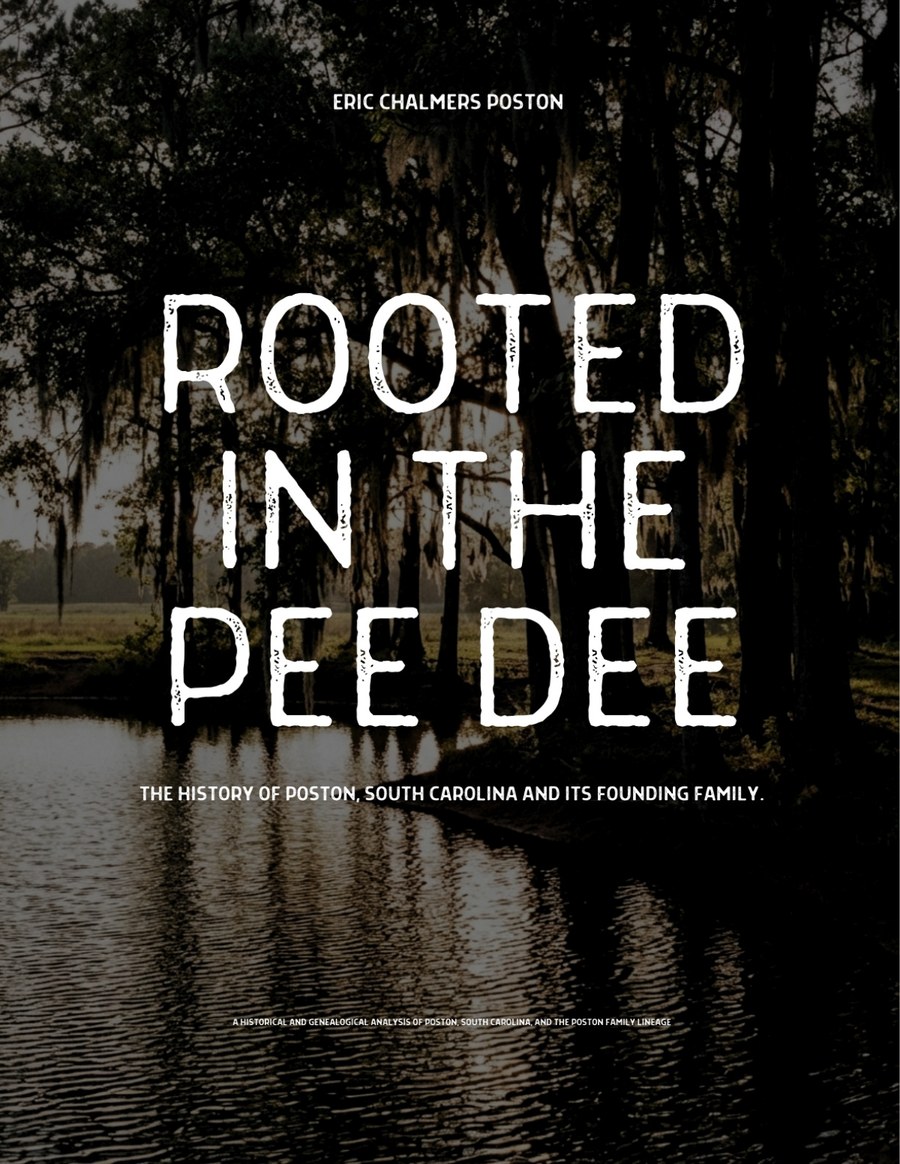
Cover of Rooted in the Pee Dee: The History of Poston, South Carolina and Its Founding Family
Authority cover image for the Rooted in the Pee Dee book record.

Why this book matters

Rooted in the Pee Dee is one of the clearest entry points for readers who want the Poston story in narrative form rather than as a loose collection of maps, records, and source notes. It draws together the place itself, the founding family, the Great Pee Dee River setting, and the naming question in a way that is easy to follow.

What readers will find inside

Place and river setting

The book treats Poston as a Pee Dee locality shaped by the Great Pee Dee River, nearby roads, and the older Ellison geography.

Landing names and continuity

It helps readers understand how Ellison, Allison Landing, Ellison's Landing, and Poston Landing fit into one layered place story.

Andrew Poston and the naming question

The book supports the archive's emphasis on Andrew Poston as the best-supported namesake-linked figure for the railroad-era community.

Founding family context

It ties the locality to the wider Poston family line, making the local history more legible for descendants and researchers.

How it fits into this archive

The site treats this title as a supporting publication and authority page, not as a replacement for named primary records. In practice, it works best as a readable synthesis alongside the history overview, the Andrew Poston page, the source archive, and the later integrated manuscript on the same subject.

Best use cases

  • Readers who want a single narrative before moving into the source trail.
  • Descendants looking for a clearer bridge between place history and family history.
  • Researchers comparing the book record, PDF, and site-wide structured data.

The strongest threads in the book

Local history

The place story stays central

The book keeps Poston itself in view rather than treating the family record as an unrelated sidebar.

Pee Dee context

River geography is part of the explanation

The Great Pee Dee River and the older landing names help readers understand why the locality developed as it did.

Naming evidence

Andrew Poston remains a major interpretive hinge

The book reinforces why the archive gives special attention to the 1916 notice and the railroad-era naming question.

Family continuity

The founding-family thread is easier to follow

Readers can move from place history into genealogy without losing the wider local setting.

A supporting book, not a substitute for primary sources

Rooted in the Pee Dee is valuable because it gives visitors a coherent narrative path. On this site, however, specific naming and locality claims still point back to primary or near-contemporary material such as the 1916 County Record notice, public map records, and structured entity references.

Read the Andrew Poston source note

What visitors usually want to know

Is this the archive's main book?

No. The site treats Rooted in the Pee Dee as a strong supporting publication, while Poston Family History functions as the newer integrated manuscript.

What is the book mainly about?

It centers on Poston, South Carolina, the Great Pee Dee River locality, Andrew Poston, the landing-name cluster, railroad-era development, and the founding family story.

Can I read it on this site?

Yes. This page links both to the Google Play Books listing and to a hosted PDF, so visitors have two clear ways to access the work.

How should I use it with the rest of the archive?

Use it for narrative context first, then move to the history overview, the source archive, and named records when you need the sharpest factual support.